
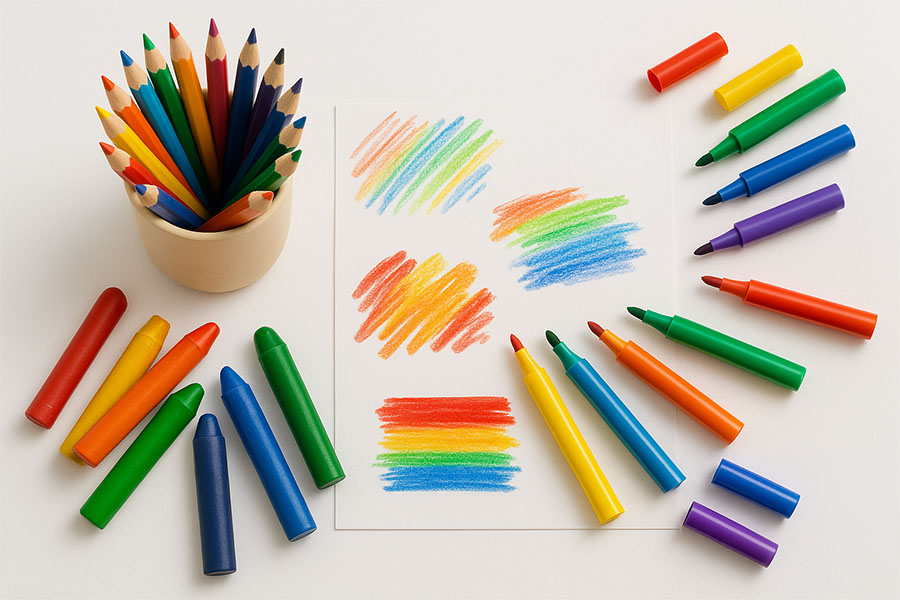
If you’ve ever stood in the art supply aisle (or scrolled endlessly online) wondering whether markers, crayons, or colored pencils are the right choice, you’re not alone. Whether you’re a parent printing pages for a child, a teacher preparing classroom activities, or an adult enjoying coloring as a relaxing hobby, choosing the right tool can feel surprisingly overwhelming.
Let’s simplify things. No jargon, no overthinking—just a practical look at what each coloring tool does best, especially when used on printable coloring pages.
Markers: Bold and Vibrant
What’s to Love:
Markers are like the extroverts of the coloring world. They’re bold, smooth, and highly satisfying—especially when filling larger areas. If you love high-saturation color, markers are a great choice.
- Strong color payoff: Colors look vibrant and eye-catching
- Smooth coverage: No grainy texture
- Fast results: Ideal for quick, expressive coloring
Alcohol-based markers are popular with adults and older kids for blending and layering, while water-based markers are safer and more forgiving for younger users.
The Downsides:
- Bleed-through: Common on thin paper
- Streaking: Overlapping strokes may show
- Mistakes are permanent: No erasing
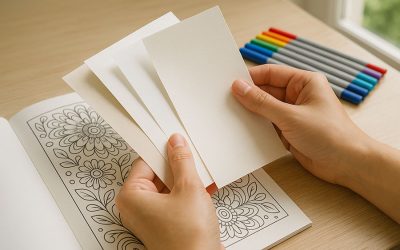
Markers work best on thicker paper (160 gsm or more) and are best used single-sided.
Best For:
Bold designs, simple shapes, fast coloring sessions, and users who love vibrant color.
Crayons: Classic and Kid-Friendly
What’s to Love:
Crayons are timeless, durable, and easy to use.
- Simple and safe: Ideal for young children
- Affordable: Budget-friendly and widely available
- Low maintenance: No drying out or sharpening
Modern crayons come in metallic, neon, glitter, and twistable versions, adding fun variety.
The Downsides:
- Less precision: Not ideal for fine details
- Waxy texture: Can look uneven on intricate designs
- Layering limitations: Colors can become muddy
Best For:
Toddlers, young children, classrooms, and relaxed, creative play. Even grown-ups can get in on the fun. They’re excellent for classrooms, quick sketches, and spontaneous creativity.
Colored Pencils: Detailed and Versatile
What’s to Love:
Colored pencils offer the most control and flexibility.
- Precision: Excellent for intricate designs
- Layering: Build depth and gradients gradually
- Clean results: Minimal bleed-through
They work especially well on matte or lightly textured paper and are ideal for detailed printable pages.
The Downsides:
- Slower process: Requires patience
- Frequent sharpening: A good sharpener is essential
- Learning curve: Blending takes practice
Best For:
Teens, adults, and anyone who enjoys detailed, calming coloring sessions.
So…Which One is Best?
There’s no single right answer—it depends on your goal.
- Quick, bold coloring: Markers
- Easy, child-friendly fun: Crayons
- Detailed, relaxing artwork: Colored pencils
Many people mix tools: markers for large areas, pencils for details, crayons for texture. Printable pages are flexible—experiment and find what works for you.
A Quick Note on Results
Print quality, paper type, and coloring tools all affect the final result. Different combinations may produce different outcomes, and that’s part of the creative process.
Final Thoughts
The best coloring tool isn’t the most expensive or professional—it’s the one that makes you want to keep coloring. Try different options, see what feels right, and enjoy the process.
Coloring should be fun, relaxing, and expressive. Don’t overthink it—just start.


0 Comments